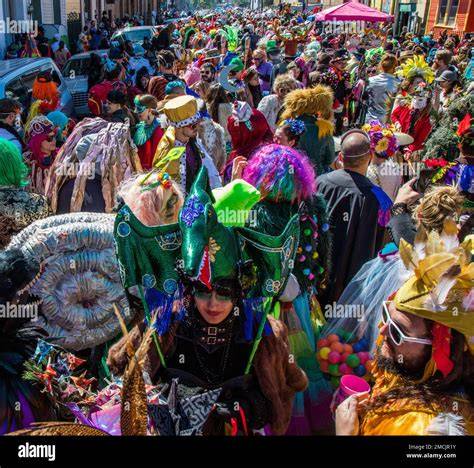
Mardi Gras se dit aussi Fat Tuesday en anglais. C’est une fête joyeuse avec des défilés, des chars décorés, des costumes, des masques, de la musique et beaucoup de nourriture.
La fête a lieu le mardi qui précède le mercredi des Cendres, avant le Carême. En anglais britannique, on dit aussi Shrove Tuesday ou Pancake Day, car les familles mangent souvent des pancakes ce jour-là.
1. Le vocabulaire essentiel
| Anglais | Français |
|---|---|
| Mardi Gras | Mardi Gras |
| Fat Tuesday | Mardi Gras, littéralement « mardi gras » |
| Shrove Tuesday | Mardi Gras en anglais britannique |
| Pancake Day | la journée des pancakes |
| carnival | carnaval |
| parade | défilé |
| float | char décoré |
| mask | masque |
| costume | costume |
| beads | colliers de perles |
| king cake | gâteau des rois de Mardi Gras |
| to throw | lancer |
| to catch | attraper |
| green | vert |
| purple | violet |
| gold | or |
2. Mardi Gras et Fat Tuesday
Mardi Gras is also known as Fat Tuesday. The name “Mardi Gras” is French, translating into “Fat Tuesday” in English. Mardi Gras is a festive holiday celebrated all around the world.
It is a lively and exuberant celebration with deep roots in history and a tapestry woven with colourful customs. This festive carnival has evolved over centuries, blending various cultural influences into a dazzling display of music, dance, and vibrant costumes.
3. L’histoire de Mardi Gras
The origins of Mardi Gras can be traced back to ancient pagan celebrations and medieval European traditions. The Roman festivals of Saturnalia and Lupercalia marked the end of winter and the arrival of spring.
During these early celebrations, people engaged in feasts and festivities before the solemn Christian season of Lent. When Christianity spread, these pre-Lenten celebrations were incorporated into the Christian calendar, giving birth to the Mardi Gras we know today.
The celebration originated as a religious holiday, marking the day before the Christian tradition of Lent. Christians would often make pancakes on this day to use up all of the milk, butter, and eggs in their houses.
This became known as Pancake Day, and later as Mardi Gras when people began to celebrate it in France. Today, Mardi Gras is celebrated by people of all cultures.
4. Mardi Gras aux États-Unis
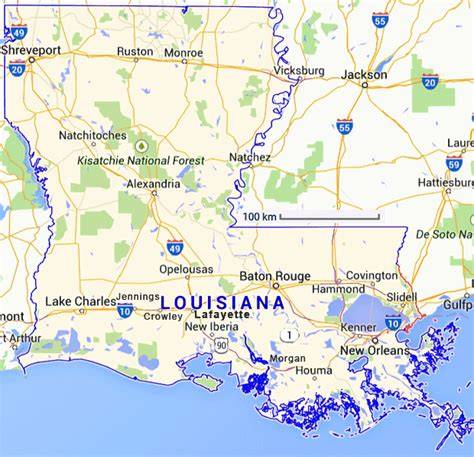
New Orleans, the great city at the mouth of the Mississippi is one of the most colorful, most cosmopolitan and most European of American cities. Though very few people in the city now speak or understand much French, New Orleans prides itself on its French heritage.
The historic center of the city is known as the French Quarter, and the city is famous across the United States for its “Mardi Gras” celebrations. It is still one of America's great ports, where goods that have traveled down the Mississippi valley by barge or by truck or by train are offloaded and trans-shipped, to be exported all over the world.
Mardi Gras in the United States has its origins in 1699 when French explorers, led by Pierre Le Moyne d’Iberville, landed near present-day New Orleans. The French brought the tradition of lavish masked balls and feasts, and over time, Mardi Gras in Louisiana evolved with the influences of African, Spanish, and Native American cultures.
Mardi Gras, meaning literally “Fat Tuesday” was first celebrated in Louisiana by French colonists in the eighteenth century. It was, in those days, a day of feasting before the start of Lent, the 40-day period leading up to Easter.
As the last “normal” day before the austerity of Lent, “fat Tuesday” was a day to make the most of, a day of carnivals, eating, drinking and revelry. It has remained a day of carnival ever since; but the original French celebrations are just a small part of today's festivities.
Mardi Gras, New Orleans style, owes as much to Afro-Caribbean customs and the Latin American carnival tradition as it does to the French colonists who established it in their new city.
5. La saison du carnaval
The Mardi Gras celebrations actually last for several weeks. About a month before the main carnival, a season of elaborate balls and parties begins: the official Mardi Gras program is published, and shops start selling the very sweet and colorful “King Cake”, a delicacy that can only be found during this holiday season.
In other parts of Louisiana, the first Mardi Gras parades actually take place three to four weeks before the big carnival in New Orleans, and even in the city itself, smaller parades begin two weeks before the big day.
In some places- such as New Orleans, Louisiana- the parties and parades can last for two weeks.
6. Pancake Day
Mardi Gras is often a time when people enjoy lots of special treats. Interestingly, pancakes are a big part of this day in the United Kingdom. There, Mardi Gras is called Shrove Tuesday.
The word “shrove” comes from an old term “shrive”, which means to admit to what you’ve done wrong and be forgiven. People eat pancakes on this day as a way to use up foods like eggs and milk before Lent starts.
This is because Lent is a time when people eat less of certain things. Christians would often make pancakes on this day to use up all of the milk, butter, and eggs in their houses.
7. Les défilés et les chars
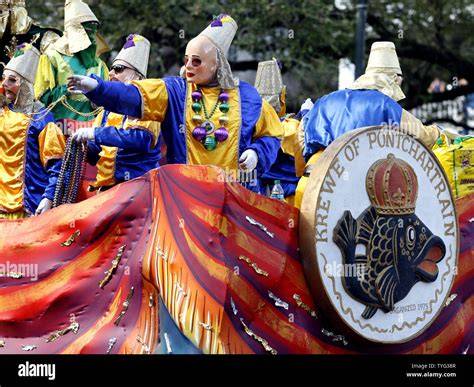
Mardi Gras is synonymous with elaborate parades featuring dazzling floats, marching bands, and costumed revellers. The first recorded Mardi Gras parade in New Orleans took place in 1837.
Since then, the parades have grown in scale and extravagance. Krewes, the social organizations that host the parades, meticulously plan their floats, often with a theme that can range from mythical creatures to historical events.
The processions are organized by groups called “Krewes”, which each have mythological or historic names, such as Proteus, Endemion, or Bacchus.
The one I liked best was Zulu, a parade organized by members of the city's black community, resplendent with its colorful ornate floats and costumes based on African themes.
8. Les perles, les jetons et les objets lancés
One of the most recognizable Mardi Gras customs is the tradition of “throws.” Revellers on parade floats toss beads, doubloons (coin-like tokens), and various trinkets to the eager crowd.
The act of catching these throws is considered a symbol of good luck and adds an element of excitement to the celebration.
Perhaps the most astonishing aspect of Zulu and other parades was the “throws”. As the floats move slowly through the crowds, tradition has it that those on them should throw all kinds of trinkets into the crowd - plastic necklaces, engraved plastic cups, plastic medallions and other souvenirs.
Most parade-goers do all they can to catch these materially worthless items, and I found myself quickly caught up in the frenzy, scraping on the sidewalk among the surging spectators to proudly pick up my plastic prize.
In the heat of the moment, it's hard not to be caught up in the madness of this ritual, in spite of the worthlessness of the prizes!
Traditionally, people in New Orleans use the “throw cups” they pick up, and decorate their cars or homes with the other souvenirs they take home.
9. Le king cake
One of the sweetest traditions of Mardi Gras in the USA, is the King Cake. This circular pastry, adorned with colourful icing and sprinkles, hides a tiny plastic baby - representing Jesus - inside.
Whoever discovers the baby is believed to have good luck and must host the next Mardi Gras party. This delicious treat symbolizes the search for the baby Jesus by the three kings.
The colored sugars are gold, green and purple, which are the traditional colors of Mardi Gras. Gold represents power, green stands for faith, and purple is justice.
Le king cake est l'équivalent américain de la galette des rois, popularisé par les Français de Louisiane. Une petite figurine de bébé symbolisant l'enfant Jésus est cachée dedans : celui qui la trouve doit acheter le king cake suivant.
10. Les couleurs de Mardi Gras
Les couleurs officielles de Mardi Gras à La Nouvelle-Orléans sont purple, green et gold. On les retrouve sur les perles, les costumes, les chars et les décorations.
| Couleur | Signification |
|---|---|
| purple | justice |
| green | faith, la foi |
| gold | power, le pouvoir |
Pour retenir ces mots, on peut utiliser la phrase : “Purple, Green, Gold: Justice, Faith, Power.”
11. Les masques et les costumes
Mardi Gras is a time for revellers to don elaborate masks and costumes, allowing them to escape from everyday life and embrace a sense of anonymity.
The tradition of wearing masks can be traced back to the medieval European carnivals and has become an integral part of the celebration, allowing participants to immerse themselves fully in the festive spirit.
Mardi Gras parades often include colourful floats, feathered masks, and lots of food.
12. Une expérience à New Orleans
My first Mardi Gras party took place in a friend's apartment in New Orleans a few days before the parade. The apartment was decorated out in the season's traditional colors of green, gold and purple; the hi-fi system pounded out carnival music, while the guests danced, talked, and ate King Cake, washed down with “Blackened Voodoo Beer”, another specialty brewed in a local brewery.
On Fat Tuesday itself, I joined the hundreds of thousands of local people and visitors, to watch the processions wind their way through the streets of New Orleans.
As a Yankee spending my first Mardi Gras in New Orleans, however, I made some mistakes in planning my time. There is so much going on at Carnival time, that you can't see everything, and I was disappointed not to see more of the city's famous Dixieland jazz bands parading through the streets, but obviously I was often in the wrong place at the wrong time.
After a year, I know that I still have a lot to learn about the customs, cultures and traditions of Mardi Gras in New Orleans. This year, I'll try and restrain myself during the throws, so that I won't come home with a bagful of plastic objects that I simply have to recycle.
13. Phrases simples pour parler de Mardi Gras
- Mardi Gras is a carnival. - Mardi Gras est un carnaval.
- People wear masks and costumes. - Les gens portent des masques et des costumes.
- There are colourful parades. - Il y a des défilés colorés.
- The floats are decorated. - Les chars sont décorés.
- People throw beads. - Les gens lancent des colliers de perles.
- Children catch the beads. - Les enfants attrapent les perles.
- People eat pancakes on Pancake Day. - Les gens mangent des pancakes le jour des pancakes.
- The king cake hides a tiny baby figurine. - La galette cache une petite figurine de bébé.
- Green, purple and gold are traditional colours. - Le vert, le violet et l’or sont des couleurs traditionnelles.
- Mardi Gras is very popular in New Orleans. - Mardi Gras est très populaire à La Nouvelle-Orléans.
14. Petit texte à lire en anglais
Mardi Gras is also known as Fat Tuesday. It is a colourful and exciting carnival. People wear masks and costumes, listen to music and watch parades.
In New Orleans, the floats move through the streets. People on the floats throw beads and small presents to the crowd. Children and adults try to catch them.
Families also eat a special cake called a king cake. It has purple, green and gold decorations. A tiny baby is hidden inside the cake.
In the United Kingdom, Mardi Gras is called Shrove Tuesday or Pancake Day. People eat pancakes before Lent starts.
15. Questions de compréhension
- What is another name for Mardi Gras?
- Where is Mardi Gras very famous in the United States?
- What do people wear during the celebration?
- What are floats?
- What do people throw from the floats?
- What is hidden inside a king cake?
- What are the three traditional colours?
- What is Mardi Gras called in the United Kingdom?
- Why do people eat pancakes?
- When does Mardi Gras take place?
16. Mots à retenir
| Mot anglais | Traduction |
|---|---|
| festive | joyeux, festif |
| celebration | célébration |
| tradition | tradition |
| parade | défilé |
| float | char |
| marching band | fanfare |
| mask | masque |
| costume | costume |
| beads | perles |
| throw | objet lancé |
| pancake | pancake, crêpe |
| cake | gâteau |
| crowd | foule |
| good luck | bonne chance |
| to celebrate | célébrer |
| to catch | attraper |
| to throw | lancer |
17. Attention aux différences entre les mots
Mardi Gras, Fat Tuesday et Shrove Tuesday désignent le même jour, mais les usages peuvent changer selon les pays. Pancake Day insiste surtout sur la tradition culinaire britannique.
Mardi Gras ou Fat Tuesday est le terme américain festif, particulièrement associé à La Nouvelle-Orléans. Shrove Tuesday est le terme britannique religieux, tandis que Pancake Day correspond à l’angle culinaire britannique.
Trois mots, une seule date : la veille du mercredi des Cendres.
18. Une fête de joie et de diversité
Mardi Gras, with its rich history and eclectic customs, continues to captivate and unite people worldwide. From the quirky traditions like pancake indulgence to the lively parades and unique throws, Mardi Gras remains a testament to the enduring spirit of celebration, diversity, and the joyous coming together of communities.
Rooted in history and adorned with unique customs, Mardi Gras has become a cultural phenomenon that transcends borders and brings communities together in joyous celebration.